#8, The Space to Go Deeper; An Interview with a Research Scientist at Meta
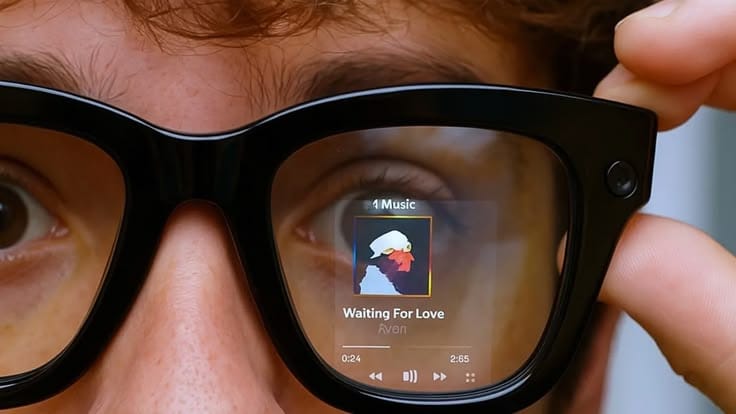
There is an old expression: “Don’t borrow trouble.” In other words, don’t worry about problems before they happen. Yet the common conception among people is that the responsible way to pursue an ambition is to prepare for every possible way it might fail. Keep a backup plan, have a second option, know what you will do if that doesn’t work out. But sometimes, preparing for failure could consume the energy required to pursue success. I didn't realize this was happening to me until I had the opportunity to meet Dr. Suwon Shon, a Research Scientist at Meta in the Wearables Department.
Dr. Shon’s focus is on machine learning-based speech, speaker, language, and dialect recognition. As a research scientist, he develops machine-learning models that analyze speech to identify speakers, languages, and dialects, helping AI systems better interpret the complex variations in human speech. If you were to sit next to him at his desk for a full day, however, you would not see flashy sci-fi experiments, but hours upon hours of coding.
His path to this specialized field was far from calculated. During college, he did not start with a clear blueprint for his future career; instead, he chose a major based on his test scores, a sense that the field was future-oriented, and the belief that it was something he could handle. As he gradually encountered areas that sparked his interest, he naturally gravitated toward speech science.
His academic trajectory began entirely in Korea, where he earned both his bachelor’s and doctorate degrees at Korea University and conducted his graduate research. From there, he flew across the ocean to become a postdoctoral researcher at MIT. This process laid the groundwork for building his career in the United States, where he now works as an AI research scientist at Meta, as aforementioned.
When preparing for his postdoctoral research at MIT, he already knew he wanted to build his career in the United States. He had seen many peers who planned to go abroad but simultaneously looked for backup options in Korea, only to end up settling there permanently. Determined not to settle, he deliberately chose not to apply to any jobs in Korea while preparing to go. Looking back, it was a risky decision, especially since he was beginning to build a family around that time. Yet he pushed forward with a slight “things will work out somehow” mindset.
When asked about the biggest adjustments in moving from Korea to the US, he noted that alongside the expected language barriers, he was suddenly surrounded by peers who were ridiculously smart and far more adept than him. Interestingly, though, what might typically be viewed as an intimidating obstacle turned out to be an advantage due to a key cultural difference. In traditional Korean organizational settings, project boundaries and "ownership" are often sensitively guarded and stringently drawn. In the US, however, he found the team culture far more welcoming and open. Consequently, the presence of exceptionally qualified individuals didn't feel like a threat, but rather a direct opportunity to learn and get involved.
Reflecting on his responses, I observed a quality in his demeanor: a quiet composure that emitted confidence. I suspect this tranquil mindset is what grants him headspace and breathing room, and what enabled him to stay centered and focused entirely on building a career abroad, rather than getting distracted and cowering out to retreat to a comfortable safety net. Where others might feel daunted or small, he seemed to approach challenges as resolvable opportunities. By refusing to waste energy on self-doubt or worry, he may be preserving his internal bandwidth to focus on what truly matters and develop genuine depth and insight in his field.
His career seemed to illustrate how education could serve as a gateway: from a top Korean university to MIT and eventually to one of the world’s leading technology companies. This made me curious about what role institutions like these actually play in shaping a person’s trajectory. Do these environments primarily recognize pre-existing abilities, or do they actively transform life trajectories? From his perspective, their greatest value seemed to lie less in formal classroom instruction than in the opportunities and networks they provide. Unlike high school teachers, college professors are primarily focused on research, and many top students develop through self-directed study rather than simply attending lectures. He felt that much of the deeper learning in higher education happens through hands-on lab work, public teaching demonstrations, and interactions with peers. He particularly recalled insightful teaching demonstrations he had attended and noted that opportunities to observe teaching, participate in labs, and learn directly from others seemed more accessible in the US than in his experience in Korea.
As he noted, real expertise and insight become immediately obvious whenever you talk to someone; you can tell whether they have invested serious time and energy to "dig deep" into a topic. Developing this kind of depth is not gained simply by sitting in a classroom alongside everyone else. It requires personal agency—actively taking responsibility for one's growth, surrounding oneself with people who share a similar depth of understanding, and making the most of what an institution offers beyond its lectures.
What I found most compelling about his story is how it reframes our understanding of ambition and career progression. We often fall into the trap of believing that reaching ambitious goals requires hyper-calculating every step and constructing layers and layers of elaborate safety nets before actually leaping. However, his journey points to a far more practical mindset: maybe we can make more active decisions and relentlessly work towards something if we reduce the hectic activity inside our head and redirect it. We can use that mental space to engage more deeply and actively with both what is already in front of us and what will be in front of us—to ask better questions and make fuller use of the environments we find ourselves in.
Perhaps that is where both progress and insight begin.