#5, Called, Not Calculated; Insights from an Interview with CEO Uahn Ko
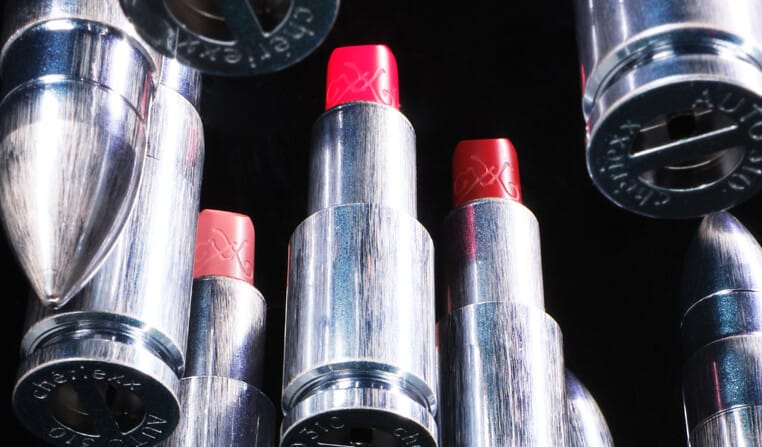
When I initially heard about Ms. Uahn Ko, the 21-year-old CEO of Cheriexx, I deemed her to be someone incredibly independent and strong who had carefully curated her own path in education and career. She seemed like the kind of person who always knew what she wanted and worked relentlessly to get there. Although that was partly true, she turned out to be something else as well. Yes, she was intelligent. Yes, she was incredibly self-driven. But throughout the interview, I got the sense that her life was not merely the result of meticulous planning. Rather, she seemed to be someone who was simultaneously led by circumstance and by God, while somehow making the best of whatever situation she found herself in.
Finding Direction Through Disruption
Before health issues started getting in the way, Ms. Ko was excelling academically, with perfect scores on standardized tests. (On a side note, hearing this rather threw me off because I’d never actually met someone with a perfect score.) But deteriorating health began holding her back from her aspirations, pulling her into an abyss of helplessness and depression. Then her mother made a suggestion. "For just one year, let's try everything you would like to do."
Since she was young, Ms. Uahn had enjoyed creating personalized gifts for friends. So she decided to design a bullet-shaped lipstick to encourage a friend who was going through a similar stage of life. Without really understanding how cosmetic manufacturing worked, she contacted Kolmar Korea. Later, she said, she learned that the minimum production quantity was around 3,000 products. This interaction seems almost ridiculous at first glance: a random high school student contacting one of Korea’s largest cosmetic manufacturers. Yet something strange happened. When the manager saw her design, she was surprised and brought in Kolmar's design team, and instead of turning her away, they encouraged her to develop the lipstick into an actual brand. At one point, Ms. Ko mentioned several K-pop music videos that inspired her. An average person would simply admire the videos as a consumer and move on. But she decided to contact the director, and, for some reason, the director saw and replied. The conversation eventually led to collaboration for her brand’s campaign.
As I was talking with Ms. Ko, what was so mind-boggling about her story was that launching a brand was never part of her original plan. In fact, any of the most important events in her life seemed to emerge from initiative on her part that pointed her toward circumstances she could never have engineered herself. Even the dark moments seemed to be tunnels opening up to a whole new chapter in her life. As a Christian, I could not help but notice God's hand throughout her story.
Another thing I noticed about her was that she acts. Not necessarily strategically, but she seemed to be someone constantly on their feet and willing to move recklessly, like contacting Kolmar and the music video director, even when things were uncertain. Perhaps this proactive characteristic is why her dependence on God does not remain as religious passivity but works as a crazy driving force.
More Than Blind Faith
Today, Ms. Uahn manages a company with a dozen full-time employees. Their salaries depend on the decisions she makes every day. Yet she never learned many of the skills necessary to run a business through a traditional curriculum. Because the thing she is doing is so new, so unfamiliar, and carries so much pressure, she said she has had to learn how to "lie flat" and listen for God. She described the pressure as feeling a knife against her throat. When that pressure becomes overwhelming, she goes to a particular place in her office. There, she prays and reads the bible. One thing she said particularly interested me. Because Christianity has impacted so many people, cultures, and social norms throughout history, she believes studying the Bible helps her understand people themselves. In her view, it teaches not only spiritual truths but also how to communicate with others and even business principles as well. She joked that she regrets not reading the Bible more seriously as a teenager. Had she done so, she believes she could have avoided many vain efforts and wasted detours. (I’ve been trying to stay more awake and alert during morning bible reading sessions ever since the conversation. Hi Mom, hope you’re seeing this.) At one point, she laughed and said that whenever life becomes too difficult, she reads Job, because, well, if even Job went through all of that, why can't we? But after reading and listening, she gets back up and works. The result is a form of faith that is combined with motion.
As I mentioned earlier, what fascinated me the most was that her dependence on God never translated into passivity. There is a stereotype that religious people simply sit back, obey, and wait for things to happen. I think this is not just a stereotype but what Christians should be cautious about becoming, because compliance and obedience can often easily serve as justification and pretense for intellectual sloth or apathy. Ms. Ko was not like that at all. She seemed to have opinions. Strong ones. She thought critically about society, culture, and business. This reminded me of the vitality of thinking critically, because it validates your convictions not just through religious principles but through objective evaluations, making you more reasonable and therefore influential even to those who are not religious. Ms. Uahn seemed to be someone who looks beyond herself and utilizes personal experience to create positive change on a larger scale. Even in her occupation, she seemed to be thinking about ‘What needs to be said?’ rather than ‘What can I sell?’
Toward the end of our interview, Ms. Ko showed me a mock-up of a project she is currently developing. The concept was a product addressing anxiety or depression in consumers. The project reflected a larger concern that she has. According to Ms. Ko, much of the beauty industry profits from women's imperfections, self-doubt, and shame. She finds it unacceptable that some of the most celebrated figures in the beauty industry are men. More importantly, she believes many young people today lack spaces where they can safely discuss meaningful ideas. People are anxious, depressed, and addicted to social media. I, too, have noticed how in today’s society, every topic is considered controversial to the extent that any small thing you say can raise a red flag. Group polarization is severe as people are becoming more afraid to say what they actually think, and it becomes safer to remain in the gray area.
Ms. Uahn believes things should not be this way. Just because today's youth are called a "lost generation" does not mean they should remain lost. She wants to create spaces where people, especially girls, can discuss things that matter, share experiences, voice opinions, and challenge each other respectfully. While one product may not change the world, she hopes that her design becomes a starting pistol in creating a community like that.
The Intersection of Career and Calling
After the interview, I was stunned. Partly because the events in her life seemed so miraculous that I felt compelled to believe that God, or at the very least some force larger than ourselves, was orchestrating something. But mostly, it was because I finally saw an example of something I had heard about for years. As a Christian, I have often heard messages about the intersection between career and calling, between professional success and God's purpose. Yet I had never encountered an example that felt so satisfying. Her ambitions were disrupted and redirected. But somehow, she ended up in a position where her experiences, struggles, personality, and convictions all seem uniquely suited to the work she is doing now. By the end of the conversation, I realized that someone who is incredibly smart, has insane drive, and thinks critically becomes a formidable force when those qualities are refined through hardship and combined with a love for God. I also learned that real strength is neither certainty or self-sufficiency but admitting weakness, depending on a higher power for wisdom, and still having the diligence to continue despite the uncertainty.