#9, Through a Different Lens: An Interview with a Marketing Specialist
Perhaps pursuing what we love’ isn't always about making a living out of our passions, but about finding ways to let them inform the lives and careers we build.
When it comes to building a career, we often encounter two seemingly opposing perspectives. On one hand, we are encouraged to turn our hobbies and passions into professions, making a living out of the things we love. On the other, we are often advised to set those interests aside in pursuit of financial stability, prioritizing careers that promise greater earning potential over those that align with our personal inclinations. But what if an interest does not necessarily have to become an occupation to remain meaningful?
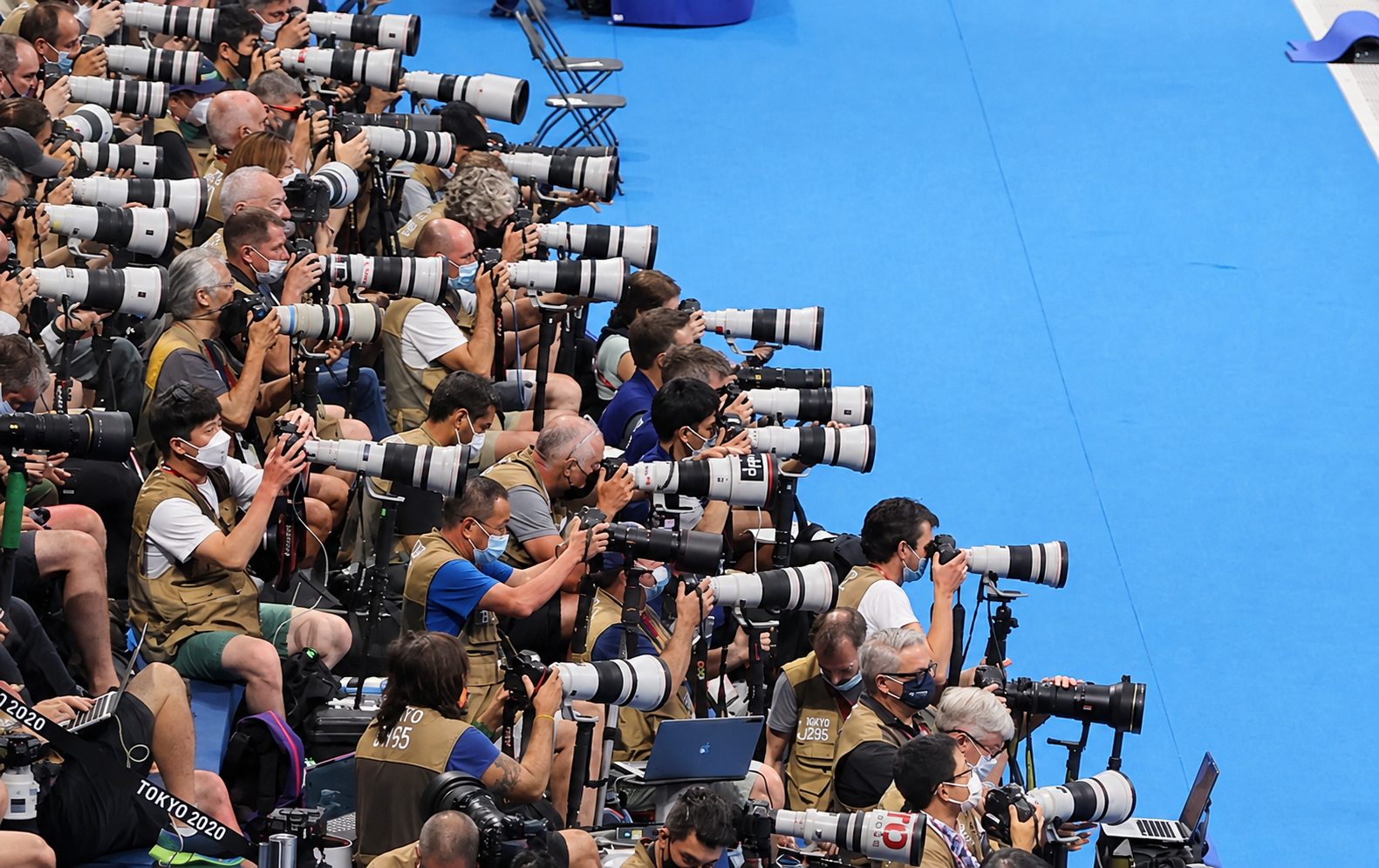
Mr. Jaeman Lee, a marketing specialist at Canon Korea, offers an interesting perspective on this relationship. Despite having built his career in marketing rather than photography or fashion, his longstanding appreciation for the latter two has played a meaningful role in his professional journey.
To understand how Mr. Lee arrived at his current role, one must look back at the beginning of his career path. Driven by a prior interest in photography and fashion, he majored in marketing and initially secured a position at LF, a prominent fashion company. For eight years, he experienced the stability of that corporate role. Over time, however, he began to feel that marketing within the fashion industry was becoming rather routine, formulaic, or even limited in the extent of creative intervention a marketer can exercise. When the right opportunity presented itself at the right time, he made the transition to Canon Korea. Nearly eight years later, he remains deeply fulfilled by the work he does today.
Unlike conventional corporate settings where marketing teams broadly handle publicity, marketing at Canon is highly specialized. Individual marketers are assigned to specific product lines—such as specialized camera series or dedicated lens lines—or focus on distinct channels, including video advertisements, social media campaigns, and live events. Because of this structure, marketers cannot just rely on surface-level slogans; they must thoroughly master their products' technical properties, advantages, and limitations to communicate professionally with clients and creators.
While technical precision is a routine part of Mr. Lee’s daily responsibilities, he shared that the true depth of his role surfaced during a recent project: the Canon Cinema Camp.
Organized by Mr. Lee and the marketing team, the fully funded camp gave aspiring filmmakers access to professional equipment, industry-led workshops, and opportunities to create and screen their own short films. At the closing session, one participant became emotional as he expressed gratitude for the support and guidance that had brought his filmmaking aspirations closer to reality.
Listening to Mr. Lee share that story, what fascinated me was that his journey seemed to reveal an evolution in the very definition of marketing. In traditional corporate settings, marketing is almost exclusively understood as a tool for selling products—a series of formulaic campaigns designed to push inventory. And it would have been easy for Mr. Lee to remain in that mindset, viewing his work purely through the lens of sales metrics and campaign execution. Yet, Mr. Lee shared that he is starting to discover a bigger part of his career and his calling: supporting and enabling people to capture the world around them and visually articulate it. As I reflected on his words, I realized that Mr. Lee’s career progression highlights how marketing can transcend its commercial limits. Instead of merely driving sales, marketing can also become a powerful vehicle for creating good social change, which was, in this instance, redirecting corporate resources toward empowering creators to pursue their dreams and capture what matters most.
Moreover, his story challenged my understanding of the relationship between personal interests and professional ambitions. I had often thought of the two as things that eventually needed to converge: if we loved something enough, we would find a way to make a career out of it. If we didn’t, we should opt for some other career with the potential for high financial return so as to be able to support the interest as a hobby on the side in the future. But Mr. Jaeman’s sense of purpose didn’t necessarily involve becoming a photographer himself. I believe this means that an interest does not have to become an occupation to remain meaningful. It can shape the industries we gravitate toward, our motivation, and even the impact we hope to make through our work. Perhaps ‘pursuing what we love’ isn't always about making a living out of our passions, but about finding ways to let them inform the lives and careers we build.